
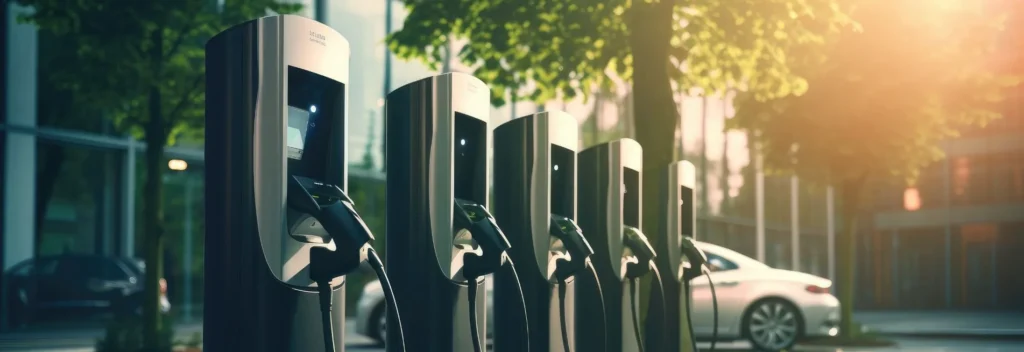
Businesses across the country are preparing for a surge in electric vehicle adoption, and installing commercial EV charging stations has become a practical way to support employees, attract customers, and future-proof properties. Understanding the cost of commercial EV charging stations is the first step in deciding which solution fits your operations, budget, and long-term goals.
This guide breaks down average EV charger costs, installation factors, types of chargers, federal incentives, and how businesses can maximize ROI.
Average Cost of Commercial EV Charging Stations
While pricing varies, most commercial EV charging installations fall into the following ranges:
Level 1 Chargers
Cost range: $300–$1,000 per unit
Level 1 charging stations offer the slowest charging speeds and are typically used in residential settings. They may be appropriate for workplaces where vehicles remain parked for long periods but are seldom chosen for customer-facing commercial use.
Level 2 Chargers
Cost range: $3,000–$7,500 including installation
A Level 2 charger delivers 10–20 miles of range per hour and works with all EV models. They are the most common choice for businesses, retail locations, municipalities, and commercial properties.
DC Fast Charging (DCFC)/Level 3 Chargers
Cost range: $25,000–$50,000+ depending on power output and site conditions
DC fast chargers, also known as Level 3 chargers, can provide 60–100 miles of range in about 30 minutes. They require significant electrical capacity upgrades and are typically used in high-traffic locations, fleets, and travel corridors.
What Influences the Cost of Installing a Commercial EV Charger?
Your total project cost includes much more than the charging unit itself. Key cost drivers include:
1. Electrical Capacity and Infrastructure
Commercial EV chargers often require panel upgrades, trenching, conduit runs, or transformer adjustments to ensure the system can support additional demand on the electrical grid. The more complex the site, the higher the installation cost.
2. Charger Type and Power Output
Higher-powered chargers (particularly DC fast chargers/Level 3 chargers) require more advanced equipment and may need extensive electrical work.
3. Distance From Power Source
Longer distances between your existing electrical infrastructure and where chargers will be installed increase conduit, labor, and material costs.
4. Site Preparation Needs
Parking layout adjustments, concrete work, bollard installation, and accessibility planning all factor into site preparation, which can influence total cost.
5. Network and Software Fees
Commercial chargers often include:
Usage reporting
Payment processing
Load management
Remote diagnostics
These features typically involve monthly or annual subscription costs.
6. Utility Demand Charges
Businesses drawing high amounts of power during peak times, especially with DCFC units, may incur utility demand fees. Smart load management systems can help reduce these costs.
7. Ongoing Maintenance
Routine inspections, cleaning, and potential part replacements add to long-term operational expenses and overall charging infrastructure needs.
Long-Term ROI and Benefits of Commercial EV Charging Stations
Commercial EV chargers can deliver value beyond the upfront investment. Businesses often install chargers to:
Attract and Retain Customers: Drivers of electric vehicles seek out locations where they can conveniently charge while shopping or visiting. Chargers can increase dwell time and repeat business.
Support Employees: Workplace charging is a desirable perk and can support corporate sustainability initiatives.
Generate Revenue: Paid charging, subscription models, and advertising/branding at stations create new revenue streams.
Future-Proof the Property: As EV adoption rises, properties with charging access naturally increase their competitive market value.
Federal and State Incentives for EV Charging Stations
Incentive programs can reduce installation costs by 30% or more, depending on eligibility. Available programs may include:
Federal tax credits under the Inflation Reduction Act (IRA)
NEVI (National Electric Vehicle Infrastructure) funding for qualifying corridors
State rebate programs and grants for commercial EV charging
Utility company incentives for infrastructure upgrades or Level 2 installations
Incentives change frequently, so businesses should review current programs before moving forward. Earthlight Tech can help you do that, so feel free to reach out to us!
Why Businesses Partner With Earthlight Tech for EV Charger Installation
Installing commercial EV charging stations requires experienced electrical contractors who understand site design, utility coordination, rebate programs, and long-term performance.
Earthlight Technologies provides:
Full-service site planning, permitting, and installation
Guidance on choosing the right EV charger
Assistance with federal, state, and utility incentives
Scalable solutions for offices, retail, multifamily, hospitality, and municipal projects
Ongoing support to ensure safe, reliable charging for your users
If you’re ready to make EV charging part of your sustainability strategy, Earthlight Tech can design and install a system tailored to your business and anticipated demand.
Get a Commercial EV Charging Station Quote Today
Whether you are installing one charger or building a multi-station system, Earthlight can help you create an efficient, reliable, and cost-effective charging setup for electric vehicles. View our portfolio of EV charging station installations and contact us today to discuss your project and begin planning your commercial EV charging station installation.