
When the power goes out, you want a backup system you can count on. But choosing between a home battery backup and a standby generator isn’t always straightforward. Both keep your lights on during an outage, but they work differently, suit different homes, and come with different long-term costs.
We’ve put together this guide to walk you through everything you need to know: how each system works, what they actually cost, how they hold up on noise and maintenance, and which option makes more sense depending on your home’s setup.
In This Guide:
What is a home battery backup system?
What is a home standby generator?
Battery backup vs. generator: side-by-side comparison
Cost breakdown
Noise comparison
Solar battery backup vs. generator
Which backup system is right for you?
Frequently asked questions
What Is a Home Battery Backup System?
A home battery backup system stores electricity and supplies it to your home automatically when the grid goes down. It doesn’t generate power on its own. Instead, it stores energy from your solar panels or the utility grid and releases it when you need it.
A complete system has three core components:
Battery: Stores the energy your home draws on during an outage
Inverter: Converts stored DC power into AC electricity that your appliances can use
Charge controller: Manages the flow of electricity between your solar panels, battery, and home
Modern home battery systems, like the Tesla Powerwall and FranklinWH, are compact units that install indoors or outdoors. When the grid goes down, they switch to backup power in milliseconds. Most homeowners don’t even notice that the outage happened.
What Is a Home Standby Generator?
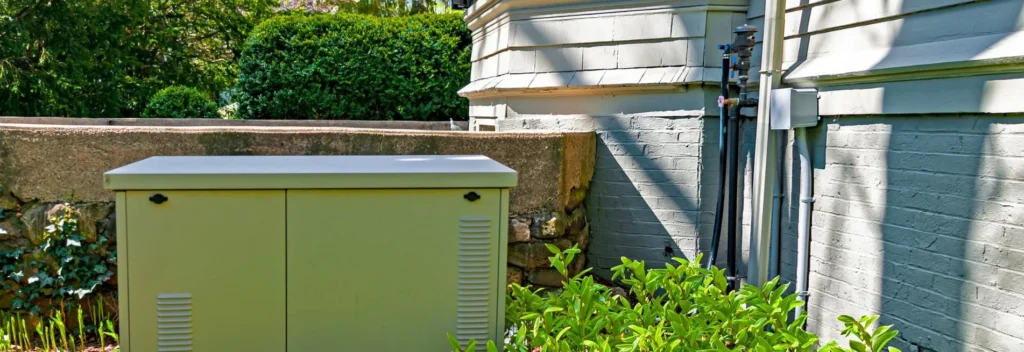
A home standby generator is a permanently installed unit that kicks on automatically when it detects a power outage. Unlike portable generators, standby generators are wired directly into your home’s electrical system and run on a continuous fuel supply, typically natural gas, liquid propane, or diesel.
Standby generators can power your entire home for as long as fuel is available, which makes them a common choice in areas prone to outages lasting several days. The trade-offs are real, though: they’re loud, require regular maintenance, produce carbon emissions, and don’t work well alongside solar panels.
Some smaller solar-powered generators exist, but they typically provide only a fraction of the output of a full standby unit.
Battery Backup vs. Generator: Side-by-Side Comparison
Here’s how the two systems compare across the factors that matter most to homeowners:
Cost: Battery Backup vs. Generator
Cost is usually the first question homeowners ask. Here’s a clear picture of what you’re actually comparing.
Home Battery Backup System Costs
Battery backup systems carry a higher upfront cost, but there’s an important offset: homeowners who install a battery backup paired with solar panels qualify for the federal Investment Tax Credit (ITC), which currently covers 30% of the total installation cost. That’s a substantial reduction, and it applies to both the battery and the solar installation together.
If your energy needs are higher or you want whole-home coverage, adding a second battery is an option. Costs scale with capacity.
Home Generator Costs
Standby generators generally have a lower sticker price than battery systems, but that’s not the full picture. Installation adds to the cost: you’ll need a concrete pad, electrical work, and a gas line connection. On top of that, there are ongoing fuel costs and annual maintenance, including oil changes, filter replacements, and load testing. Generators are generally not eligible for federal tax incentives.
Long-Term Cost Comparison
When you factor in zero fuel costs, minimal maintenance, and the 30% federal tax credit, battery backup systems often work out to be more cost-effective over time, especially for solar homeowners who are already generating electricity and want to make the most of it.
Noise: Generator vs. Battery Backup
This is one area where battery backups have a clear edge. Most home standby generators run at 65 to 75 decibels, roughly the same as a vacuum cleaner running continuously just outside your home. That’s disruptive during the day, and genuinely difficult to sleep through at night.
Battery backup systems are completely silent. There are no moving parts, no combustion, no exhaust. You get reliable backup power without any of the noise.
If you’ve been searching for a quiet battery backup generator alternative, a home battery system is the answer. It delivers the reliability you’d expect from a generator, without any of the sound or emissions.
Solar Battery Backup vs. Generator: Why the Pairing Matters
For homeowners who have solar panels, or who are considering adding them, a battery backup system is the more natural fit. Here’s why:
A battery backup stores the excess electricity your solar panels generate during the day, so you can use it at night or during an outage.
When the grid goes down, and the sun is shining, your panels can keep charging the battery, which can extend backup power well beyond a single charge.
Generators don’t integrate with solar systems. They’re a separate fuel-dependent system that doesn’t work with the energy you’re already producing.
The 30% federal tax credit applies to battery and solar installations together, which makes the combination more financially practical.
The Tesla Powerwall and FranklinWH were both designed specifically to work alongside solar systems. They include built-in energy management that automatically prioritizes solar charging and handles the switch to backup power without any manual input.
Which Backup System Is Right for You?
The right choice comes down to your priorities, your home’s energy setup, and where you live. Here’s a simple framework:
A Home Battery Backup System Is Likely the Better Fit If:
You have solar panels, or you’re planning to install them
You want silent, emissions-free backup power
Your outages typically last less than 48 hours
You want to take advantage of the 30% federal tax credit
You prefer low maintenance with no ongoing fuel costs
You’re in a neighborhood with noise restrictions or close neighbors
A Standby Generator May Make More Sense If:
You’re in an area where outages routinely last several days
You need to power high-draw appliances like HVAC systems or well pumps
You don’t have solar panels and aren’t planning to add them
Lower upfront cost is the priority, and you’re comfortable with ongoing fuel and maintenance expenses
For most solar homeowners, a battery backup system provides more than enough emergency power, reduces long-term costs, and makes better use of the solar investment already in place.
Frequently Asked Questions
Here are answers to the questions we hear most often when homeowners are comparing battery backup systems and generators:
Is a battery backup better than a generator?
For most solar homeowners, yes. Battery systems are quieter, cleaner, require no fuel, and qualify for the federal 30% tax credit. Generators make more sense when outages regularly last several days and continuous power is essential.
Can a home battery backup be charged with a generator?
Yes, some battery systems support generator charging as a secondary input. That gives you clean solar power day-to-day, with a generator available as a charging source during extended outages.
How long does a home battery backup last during an outage?
A single Tesla Powerwall (13.5 kWh) can power essential circuits for 12 to 24 hours, depending on usage. Pairing it with solar panels extends that significantly, since the panels continue charging the battery during daylight hours.
What can a home battery backup power?
Most systems handle lights, refrigerators, phone chargers, Wi-Fi routers, and small appliances. Whole-home coverage typically requires a larger battery bank or multiple units.
How much does a home battery backup system cost?
Installed costs vary depending on the system size and your home’s setup. The federal Investment Tax Credit covers 30% of the total installation cost, which reduces the out-of-pocket expense considerably.
Are home generators loud?
Yes. Most standby generators run at 65 to 75 decibels and must be installed outside. Battery backups operate silently with no moving parts or exhaust.
Which home battery backup system should I consider?
The Tesla Powerwall and FranklinWH are both solid options. The right fit depends on your home’s energy needs, your existing solar setup, and your budget.
Get Help Choosing the Right Backup System for Your Home
We’re Tesla Powerwall Certified Installers, and we also offer the FranklinWH battery system. We work with homeowners in Connecticut, Massachusetts, and Oregon to find the backup power setup that fits their home, their solar system, and their budget.
If you’re weighing your options or ready to move forward, reach out to our team. We’re happy to walk you through what makes sense for your specific situation.
Connecticut: (860) 871-9700
Massachusetts: (413) 318-8838
Oregon: (503) 874-4142